Getting there
Walking to dinner from São Bento
Reaching the fado dinner on foot: start at São Bento station and its tiled hall, cross Porto's UNESCO-listed old town, and plan the way back after a late meal.
Reserve a fado dinner ↗Quick answer
The restaurant is in Porto's historic centre near the river, and its exact address is printed on your ticket. São Bento station is the easiest place to start from, a short walk away, and its azulejo hall is worth a few minutes. The old town is built on hills above the Douro, so wear good shoes. After dinner, taxis are the easy way back to the newer parts of the city or across to Vila Nova de Gaia.
Start at São Bento
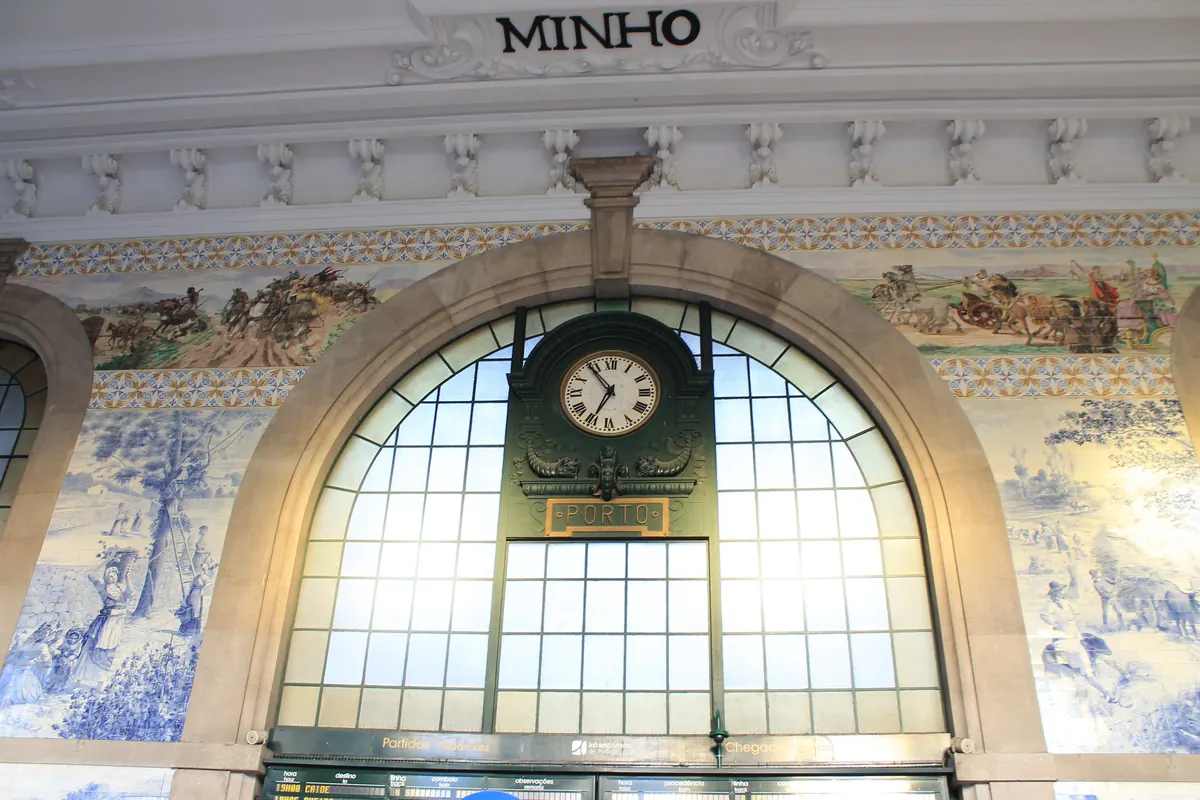
São Bento station sits inside the historic centre, and because it is a landmark every map and taxi driver knows, it makes the simplest starting point. From the station the restaurant is a short walk; the street is on your ticket, so load it into your map before you arrive. Arriving there a little ahead of time leaves room for the tiled hall before you walk on.
The tiled hall
Before you set off, step into the entrance hall. Construction of the station building began in 1904 to plans by the architect José Marques da Silva, on the site of a former Benedictine convent. Its walls carry around twenty thousand azulejo tiles by Jorge Colaço, installed between 1905 and 1916. The large blue-and-white panels show moments from Portuguese history, including the conquest of Ceuta in 1415, the expedition that legend links to Porto's tripe dish, and a coloured frieze above them follows the history of transport.
The old town around you
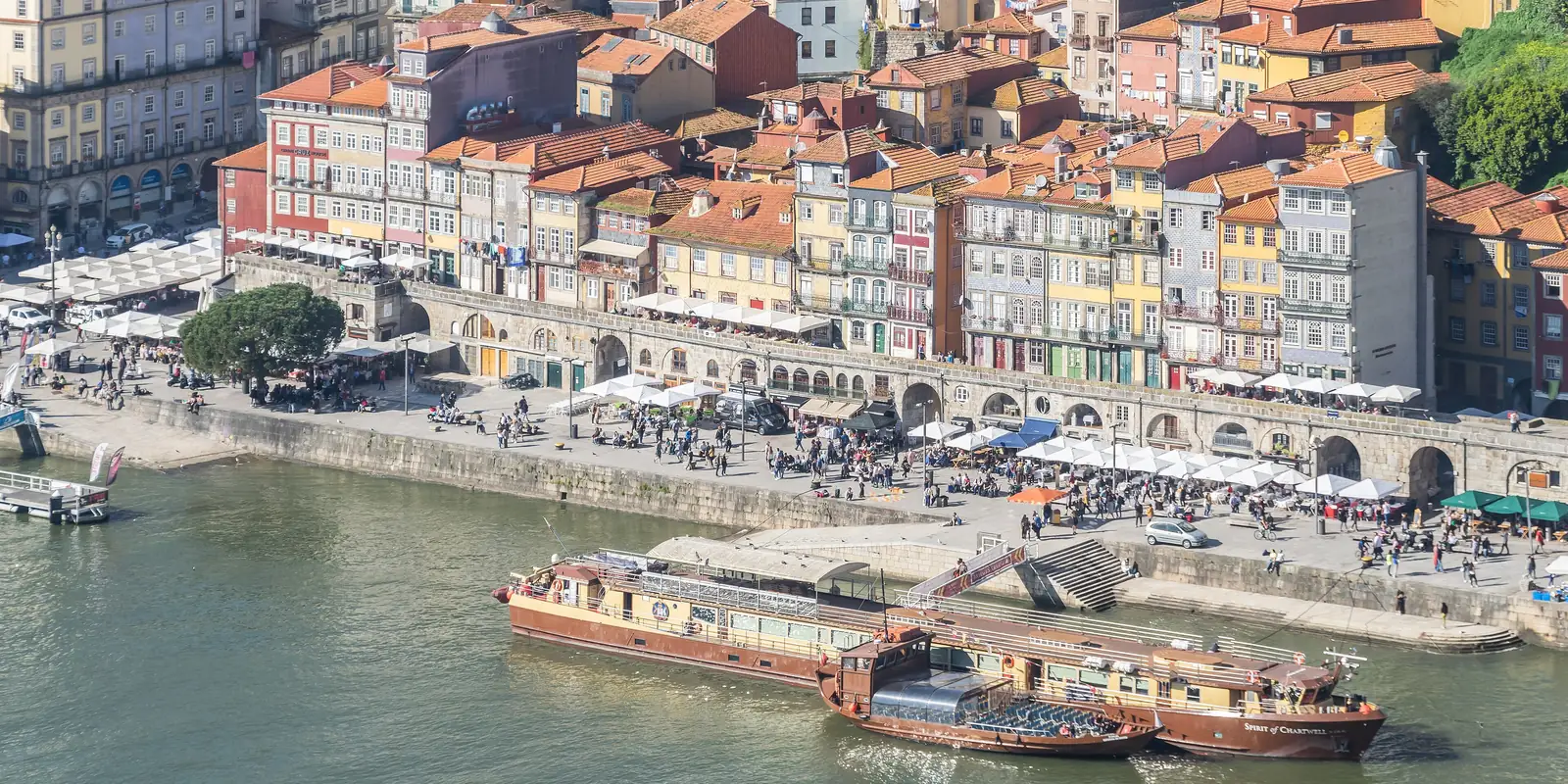
Everything on this walk lies within the area UNESCO inscribed in 1996 as the Historic Centre of Oporto, Luiz I Bridge and Monastery of Serra do Pilar. UNESCO describes it as an urban landscape with a 2,000-year history, built along the hills that overlook the mouth of the Douro. Its buildings run from the cathedral, whose Romanesque core dates to the 12th century, to the neoclassical Stock Exchange and the station you have just left.
Shoes, hills and time
The old town is built on hills, and after a long dinner the walk back uphill is what most people notice. Wear shoes that grip and that you are happy to walk in after dark. Leave earlier than your map app thinks you need to, so you arrive unhurried and are seated before the first song. For a wheelchair user, or anyone who finds hills hard, take a taxi to the restaurant door; the restaurant itself is wheelchair accessible, and arriving by car removes the hardest part of the evening.
After dinner
The evening ends late, up to two hours after it starts. Guests lodging in the old town have only a short stroll home. Otherwise a taxi is the simplest option at that hour, whether you are heading to the newer parts of Porto or across the Douro to Vila Nova de Gaia, where port has long been stored in riverside cellars. The Dom Luís I Bridge between the two cities, opened in 1886 to a design by Théophile Seyrig, is worth a look from the riverside before you go.
Coming from Gaia
If you are staying on the Gaia side of the river, you are among the port cellars. Until 1986, port could only be exported from Portugal from Vila Nova de Gaia, and the wine was traditionally brought downriver to be stored in cellars there. From Gaia, the restaurant is across the river in Porto's historic centre, and the simplest way to the door is a taxi, both there and back, especially if you plan to share a bottle of wine over the meal. Check the address on your ticket before you book the car.
Sources