The music
Fado explained before dinner
Where fado comes from, what saudade means, the two guitars you will see, and how Lisbon and Coimbra each sing it, before you sit down to listen.
Reserve a fado dinner ↗Quick answer
Fado is sung poetry from Portugal, and the reliable accounts of it reach back to 1820s Lisbon. A solo singer, male or female, is accompanied by the pear-shaped Portuguese guitar and a six-string guitar, and the lyrics often carry longing, loss and the sea. There are two main schools, Lisbon's and Coimbra's. UNESCO recognised it as intangible heritage in 2011. Knowing a little of this makes a dinner with fado much easier to enjoy.
From the taverns to the table
Fado appeared in Lisbon in the early 19th century, most likely in the bohemian quarters of Alfama, Mouraria and Bairro Alto, though its deeper roots are argued over and none of the theories is conclusive. By the middle of the century its performers were mainly working people in popular taverns, sailors and bohemians among them, who sang, danced and beat out the fado. In the second half of the century the dance rhythms faded away and the performers became singers, fadistas, which is the form you hear today. The word itself probably comes from the Latin fatum, fate.
Saudade, the mood of fado
Fado is often summed up with the Portuguese word saudade, a melancholic longing for someone or something absent, often with the sense that it may never return. The word comes from the Latin for solitude and appears in Portuguese poetry as early as the 13th century. Not every fado is sad, and a fado can be about almost anything, but it keeps a traditional structure, and the sea, poverty and acceptance of fate come back again and again. It is the mood, more than the subject, that makes a song a fado.
The two guitars
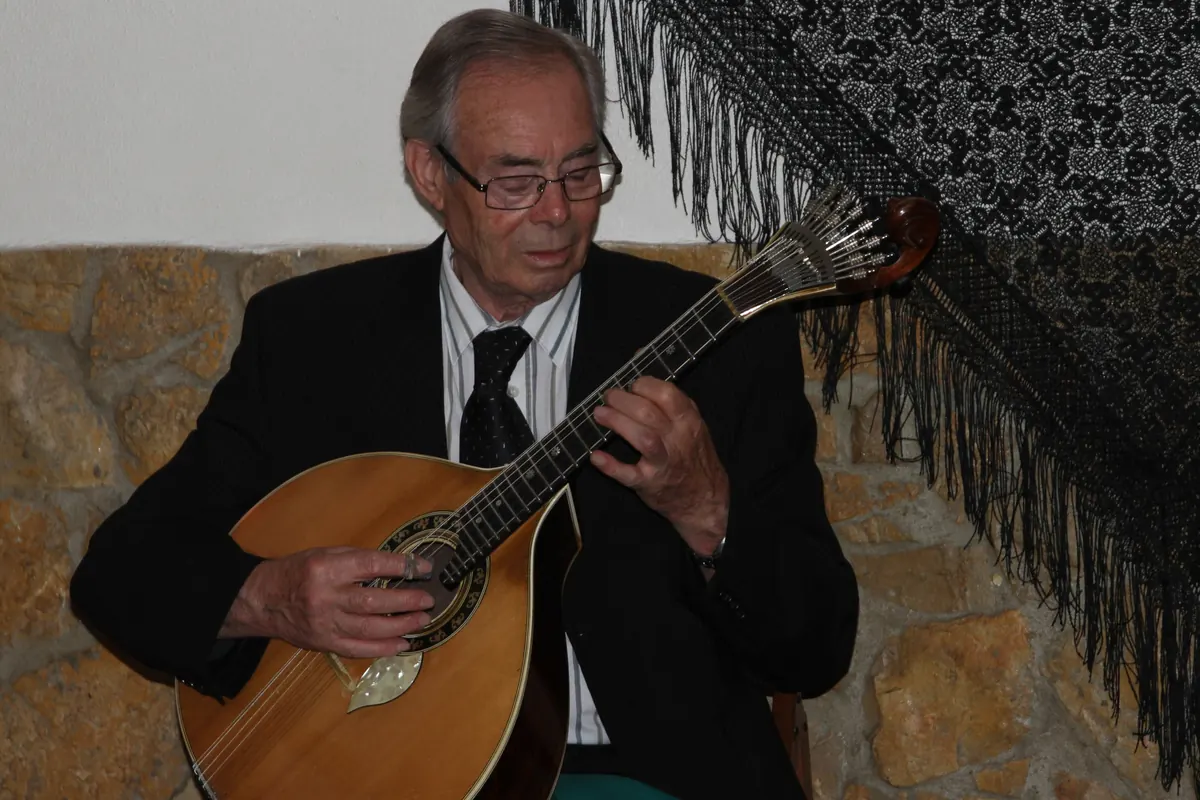
Watch the musicians as well as the singer. The Portuguese guitar, or guitarra portuguesa, has twelve steel strings in six pairs and a pear-shaped body. It descends from the medieval citole and the English guitar that became fashionable in Portugal in the 18th century, and it still uses watch-key tuners. Beside it sits the viola, a six-string guitar that keeps the chords. In the Lisbon style, the guitarra plays the introduction and then answers the singer's phrases, a musical call-and-response that is half the drama.
Lisbon and Coimbra
Fado has two main varieties, named after two cities. Lisbon's, the more famous, belongs to women and men alike. Coimbra's grew up around the city's university and the medieval tradition of serenading troubadours; its singers are men in the dark robe and cape of the academy, at night, often in squares or on the steps of old churches, and sometimes beneath a window as a serenade. Coimbra even has its own model of the guitar, with a teardrop motif on the head where the Lisbon model has a scroll.
What UNESCO recognised
UNESCO placed fado on its Representative List for humanity's intangible heritage in 2011. Its description reads fado as a blend of several sources: the sung dances of Afro-Brazilian tradition, Portugal's own songs and dances, rural music carried into Lisbon by migrants from the provinces, and city song from the early 1800s. Fado is one of two Portuguese music traditions on the list. The other is cante alentejano, from the Alentejo.
Listening at a dinner
A few things make the music easier to follow over a meal. Fado leans on rubato: as a line closes, the beat stretches and the voice lingers on its last note, so the pause belongs to the song. Melodies may switch between major and minor keys within a single verse. Some fados run in double time, others in a waltz-like triple time. You do not need to understand the Portuguese to follow the shape of a song. Keep your talk for the gaps between pieces, and you will hear what the guitarist is doing as well.
Sources